This Sunday morning, like so many Sunday mornings, I started the day on the couch, drinking coffee, and enjoying what my friends call 'light reading' - i.e. textbooks about the history of educational policy and practices.
I came across this passage from the book Keeping Track: How Schools Structure Inequality:
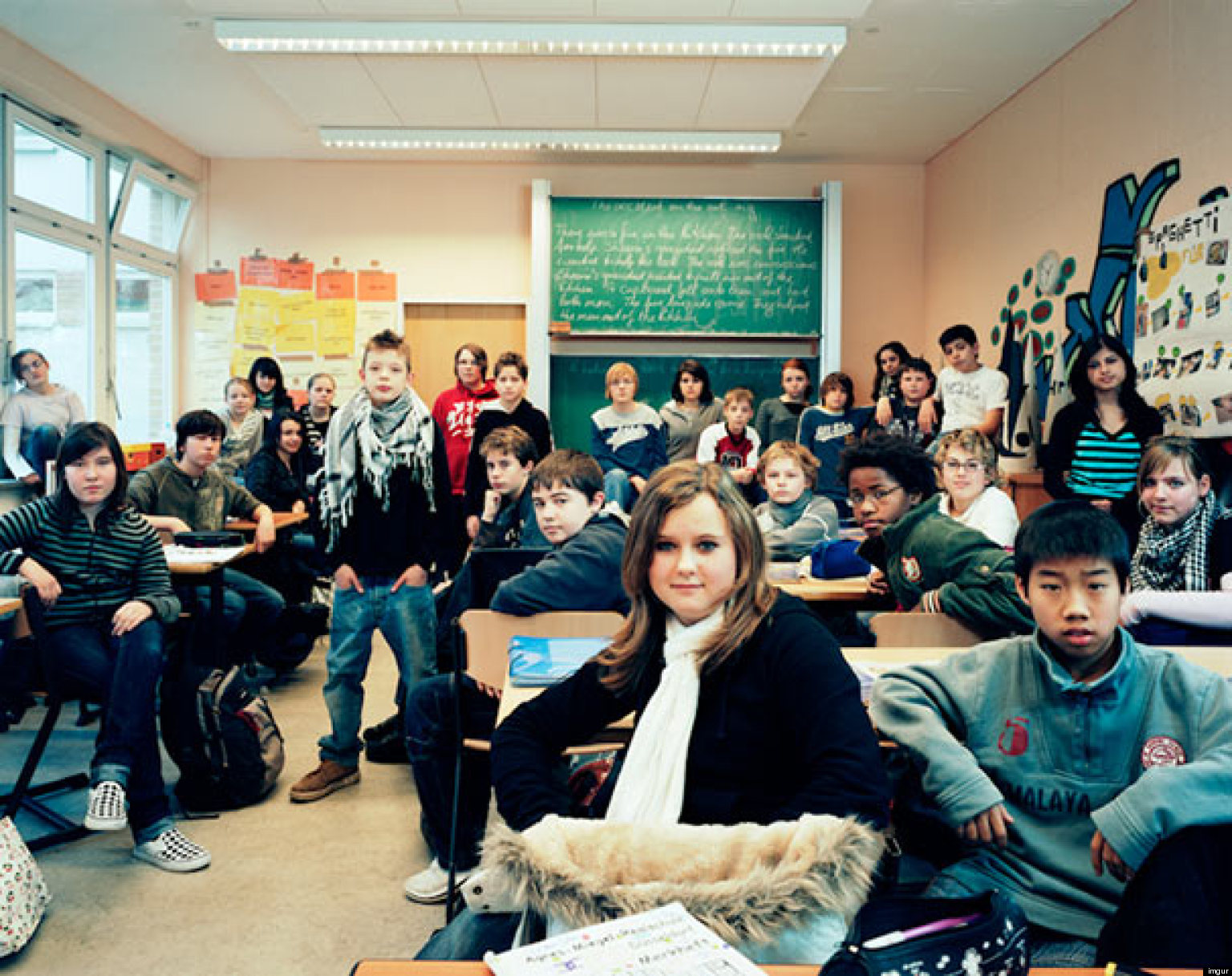
"...The mere fact that child in a single schoolroom spoke a half-dozen different languages, none of them English, inevitably altered the life of that schoolroom. And the problem went far beyond language, for each language implied a unique heritage and unique attitudes towards teacher, parents, schoolmates-indeed, toward the school itself."
Imagine for a minute that you're standing in front of a pile of newspaper scraps, you're asked to reach in an grab one at random, and you draw this passage. What year would you guess it's from? Given my experiences in teaching in four major metropolitan school districts in the United States, I would guess this passage is from the present, circa 2012.
Truth be told, it describes the state of American schoolrooms in 1909.
On of my favorite songs currently on the radio is Bastille's Pompeii, and as I consider on the ethnic makeup of American classrooms from 1909 to 2013, I can't help but reflect on the lyrics of the chorus to the song:
If you close your eyes,
Does it almost feel like nothings changed at all?
If you close your eyes,
Does it almost feel like you've been here before?
There is a tendency for educators to view their problems in isolation, as if this is the first time in the history of mankind that one teacher is responsible for educating a refugee with zero English and the affluent daughter of a police chief all in the same classroom. When in fact, if you close your eyes and think back on the history of schooling in this country, you would realize that you've been here before. Indeed, we've been here many times.
Generation after generation of educators in America have taught this class. That is the uniqueness of our profession in this country. The beauty of this is our fore bearers have left behind a legacy of best policy and practice that modern educators can learn from.
Which is why this Sunday, like so many Sundays, I am sitting down on my couch, with my coffee, enjoying some light reading.
A survey of research, current events, and stories related to urban education environments in American Schools. By: A.J. Stich
Showing posts with label Stich. Show all posts
Oct 6, 2013
Jul 9, 2012
Taiwan Teaching Part 3: Celebrity Status
This may be the most challenging blog I write because it is deeply personal. In a sense, Taiwan messed with my head, and when I returned to the United States in 2007 I was not the same person I was when I left; anyone close to me knows that I talk about it far too often. It is a place that will not leave me. And I am grateful for that. If I were to explain my experience there in a few words, I would say this: The Taiwanese people treated me like I was a celebrity, and it took me five years to understand why.
White Privilege:
I will never forget the afternoon when my friends and I decided to take a scooter ride from Jhongli to the beaches nearby. That day started with sunshine and sand and ended with a gangster and - what seemed to be - exotic dancers.
After a thirty minute ride, Mike, Tim, Sarah and I, all roommates, pulled our scooters into the parking lot overlooking the beachfront. We hopped off and set up our slack-line (a core exercise workout akin to tight-rope walking) between two cement pylons on the beach. We began walking across the slack-line and before long we had a small crowd of Taiwanese onlookers. The kids in the group looked like they wanted to try walking it, so one by one we lifted them up and supported them as they took sheepish steps across the nylon.
After entertaining our Taiwanese crowd for a while, it was time to pack up our circus act and go home. We walked over to a Water Man standing beside his pick-up truck with a large water tank strapped to the cab. The Water Man at Taiwanese beaches is like a foot-washing hose or shower on American beaches, except a water man charges a small fee for the service. This particular Water Man had had set up shop alongside the beach vendors, and in typical fashion charged a few cents for washing after a long day of playing in the sand. We approached the tank and asked the Water Man how much it cost to wash off. In broken English, he told us we didn't have to pay. Given that we were somewhat accustomed to freebees offered to westerners in Taiwan, we politely thanked the man the proceeded to wash our feet. Then, we had a brief conversation about American; then, the Water Man escorted us over to a food stall and bought us all a hot-dog on a stick; then, we walked to another food stall, where the Water Man bought us all mocha coffees; then, he packed up his truck and told us to follow him; then we followed him to a restaurant, sat down and ate a meal of rice, soup, and duck; then, the Water Man paid for the meal; and then, he begged us to come to his "restaurant" where, he said, we would receive free drinks and entertainment.
Something was up. Mike, Tim and I noticed that the Water Man didn't seem to exchange much actual cash with the vendors he was parading us to. In fact, I don't recall any money changing hands at the duck restaurant.
But despite our growing concerns about the Water Man, this whole episode - the free wash, the free snacks, coffee, and dinner - was becoming an entirely on-the-house evening of entertainment. So we accepted and followed the Water Man to his "restaurant".
We entered the restaurant and were ushered to a booth in the back of the hall, past men in dark suits smoking cigarettes. Then the "waitresses" brought us food and drinks, which were again on the house. Large bottles of beer and liquor, trays of fruits and vegetables. The Water Man, all the while, was talking to us, seemingly keeping us around to practice his English. As it turned out, the Water Man's restaurant was more of a karaoke bar, and he invited us to go on stage and sing a song, which we obliged to do, thumbing through the song book and settling on The Beatles 'Hey Jude'.
We returned to the table, and the Water Man rolled up his pant legs and showed us the tattoos on his thigh.
"Me used to be bad," he said as he made a gun with his thumb and index finger, "but now, me good." His gun transformed into two big thumbs up and a wide smile.
This was not good.
By this time, the "waitresses" had joined us at the table, and they were getting a little too comfortable, inching closer and closer to us as the night wore on, wedging themselves between Tim and I. All of the sudden, the Water Man grabbed one of the waitresses' chest, looked at us and said, "This okay!" His hand moved south, and he grabbed her between the legs, "This not okay," he marked with a smile.
That's when it hit me: this was no restaurant. Indeed, this was no karaoke bar either. It seemed like this was some sort of exotic club - hence, all the guys in suits, save for the waitresses - and we had just been given carte blanche to the evening's entertainment.
Something of a good ol' boy with many God fearing values, not accustomed to the sort of recreational activities the Water Man was offering, I wanted out, and it seemed like Mike, Tim and Sarah felt the same way too. We politely yawned and stretched our hands in the air, signaling our tiredness and our intent to leave. We told the Water Man we had to go, but he would have nothing of it. He told us to stay. So indignant was he that we felt compelled to devise an escape plan. One by one, we covertly snuck to the bathroom and vamoosed through the rear entryway.
I tell this story to conclude my series on teaching English in Taiwan because in many respects it illuminates the research of sociologist Pei-Chia Lan: "White Privileges, Language Capital, and Cultural Ghettoization" (Which you can access for free - a $30 research article - if you click on the link mid way down the page on Pei-Chia Lan's website).
To the Water Man, we were cosmopolitan. Hip. English teachers that represented a rich, sexy way of life glamorized by Hollywood, and it made him look GQ to show up around town with us in tote. In addition to making him look cool, he got to practice English.
Based on my experiences, interviews with colleagues who taught English in Taiwan and on the research of renowned sociologist Pei-Chia Lan, I will boil down the westerners place in Taiwanese society into some key principles. If you reflect on these principles before, during, and after you teach English in Taiwan, I believe they will help you understand your time there and make it more meaningful.
Taiwan Teaching Principles:
1. There is a hierarchy of English teachers. International/Graduate School teachers are at the top; cram-school teachers are at the bottom. In some cases, there is an elitism that international/graduate school teachers have. They may not even want to mingle with cram-school teachers, and they may even find them an altogether different, subordinate breed. That said, both types of teachers benefit socially and financially from being English speaking westerners.
2. Taiwanese view Westerners - particularly white westerners - as cosmopolitan. Don't be surprised if business men, doctors, or other upper-class Taiwanese befriend you. It's uppity to have western English speaking friends; hence, the Water Man's interest in us.
3. It's easier for western men to meet and date Taiwanese women than for western women to meet and date Taiwanese men. Excluding our encounter with the waitresses at the Water Man's bar, it was fairly common for Taiwanese women to approach me while I was out with friends. So much so, in fact, that when I first returned to America I was shocked that I had to make any effort at all to meet women. Moreover, in Jimmie Collin's blog "Texan in Taiwan" she - a white American woman - notes that western men didn't pay any attention to her; they were too absorbed with Taiwanese women.
4. Westerns may experience a cultural isolation, which Pei-Chia Lan's calls 'ghettoization'. She compares a westerners cultural isolation in Taiwan to that of a Chinese restaurant owners cultural isolation in America. Once an Asian operates a Chinese restaurant in America, he or she is somewhat isolated occupationally and socially to being a Chinese restaurant operator. In other words, there is not much room to get a promotion or move up the social ladder once one is pigeon holed into a job where ethnicity is so definitively connected to a specific occupation. Be warned, once you take a job as an ESL teacher in Taiwan, that's likely the end of the road. There is very little room for promotion in society: albeit, the status of an English speaking westerner in Taiwan is pretty elevated to begin with.
Hopefully the story and the advice I sheds some light on the experience of teaching English in Taiwan. As I have previously stated, I highly recommend it. Asia-Pacific, specifically Taiwan, is the most beautiful part of this globe; and for the westerner, it's life repackaged. Go. See it for yourself. And as always, e-mail me if you have questions or comments.
White Privilege:
I will never forget the afternoon when my friends and I decided to take a scooter ride from Jhongli to the beaches nearby. That day started with sunshine and sand and ended with a gangster and - what seemed to be - exotic dancers.
After a thirty minute ride, Mike, Tim, Sarah and I, all roommates, pulled our scooters into the parking lot overlooking the beachfront. We hopped off and set up our slack-line (a core exercise workout akin to tight-rope walking) between two cement pylons on the beach. We began walking across the slack-line and before long we had a small crowd of Taiwanese onlookers. The kids in the group looked like they wanted to try walking it, so one by one we lifted them up and supported them as they took sheepish steps across the nylon. After entertaining our Taiwanese crowd for a while, it was time to pack up our circus act and go home. We walked over to a Water Man standing beside his pick-up truck with a large water tank strapped to the cab. The Water Man at Taiwanese beaches is like a foot-washing hose or shower on American beaches, except a water man charges a small fee for the service. This particular Water Man had had set up shop alongside the beach vendors, and in typical fashion charged a few cents for washing after a long day of playing in the sand. We approached the tank and asked the Water Man how much it cost to wash off. In broken English, he told us we didn't have to pay. Given that we were somewhat accustomed to freebees offered to westerners in Taiwan, we politely thanked the man the proceeded to wash our feet. Then, we had a brief conversation about American; then, the Water Man escorted us over to a food stall and bought us all a hot-dog on a stick; then, we walked to another food stall, where the Water Man bought us all mocha coffees; then, he packed up his truck and told us to follow him; then we followed him to a restaurant, sat down and ate a meal of rice, soup, and duck; then, the Water Man paid for the meal; and then, he begged us to come to his "restaurant" where, he said, we would receive free drinks and entertainment.
Something was up. Mike, Tim and I noticed that the Water Man didn't seem to exchange much actual cash with the vendors he was parading us to. In fact, I don't recall any money changing hands at the duck restaurant.
![]() |
| Mike, Tim and I singing Hey Jude |
We entered the restaurant and were ushered to a booth in the back of the hall, past men in dark suits smoking cigarettes. Then the "waitresses" brought us food and drinks, which were again on the house. Large bottles of beer and liquor, trays of fruits and vegetables. The Water Man, all the while, was talking to us, seemingly keeping us around to practice his English. As it turned out, the Water Man's restaurant was more of a karaoke bar, and he invited us to go on stage and sing a song, which we obliged to do, thumbing through the song book and settling on The Beatles 'Hey Jude'.
We returned to the table, and the Water Man rolled up his pant legs and showed us the tattoos on his thigh.
"Me used to be bad," he said as he made a gun with his thumb and index finger, "but now, me good." His gun transformed into two big thumbs up and a wide smile.
This was not good.
By this time, the "waitresses" had joined us at the table, and they were getting a little too comfortable, inching closer and closer to us as the night wore on, wedging themselves between Tim and I. All of the sudden, the Water Man grabbed one of the waitresses' chest, looked at us and said, "This okay!" His hand moved south, and he grabbed her between the legs, "This not okay," he marked with a smile.
That's when it hit me: this was no restaurant. Indeed, this was no karaoke bar either. It seemed like this was some sort of exotic club - hence, all the guys in suits, save for the waitresses - and we had just been given carte blanche to the evening's entertainment.
![]() |
| At the Water Man's "Restaurant". I blurred the faces to protect my friend's identities |
I tell this story to conclude my series on teaching English in Taiwan because in many respects it illuminates the research of sociologist Pei-Chia Lan: "White Privileges, Language Capital, and Cultural Ghettoization" (Which you can access for free - a $30 research article - if you click on the link mid way down the page on Pei-Chia Lan's website).
To the Water Man, we were cosmopolitan. Hip. English teachers that represented a rich, sexy way of life glamorized by Hollywood, and it made him look GQ to show up around town with us in tote. In addition to making him look cool, he got to practice English.
Based on my experiences, interviews with colleagues who taught English in Taiwan and on the research of renowned sociologist Pei-Chia Lan, I will boil down the westerners place in Taiwanese society into some key principles. If you reflect on these principles before, during, and after you teach English in Taiwan, I believe they will help you understand your time there and make it more meaningful.
Taiwan Teaching Principles:
1. There is a hierarchy of English teachers. International/Graduate School teachers are at the top; cram-school teachers are at the bottom. In some cases, there is an elitism that international/graduate school teachers have. They may not even want to mingle with cram-school teachers, and they may even find them an altogether different, subordinate breed. That said, both types of teachers benefit socially and financially from being English speaking westerners.
2. Taiwanese view Westerners - particularly white westerners - as cosmopolitan. Don't be surprised if business men, doctors, or other upper-class Taiwanese befriend you. It's uppity to have western English speaking friends; hence, the Water Man's interest in us.
3. It's easier for western men to meet and date Taiwanese women than for western women to meet and date Taiwanese men. Excluding our encounter with the waitresses at the Water Man's bar, it was fairly common for Taiwanese women to approach me while I was out with friends. So much so, in fact, that when I first returned to America I was shocked that I had to make any effort at all to meet women. Moreover, in Jimmie Collin's blog "Texan in Taiwan" she - a white American woman - notes that western men didn't pay any attention to her; they were too absorbed with Taiwanese women.
4. Westerns may experience a cultural isolation, which Pei-Chia Lan's calls 'ghettoization'. She compares a westerners cultural isolation in Taiwan to that of a Chinese restaurant owners cultural isolation in America. Once an Asian operates a Chinese restaurant in America, he or she is somewhat isolated occupationally and socially to being a Chinese restaurant operator. In other words, there is not much room to get a promotion or move up the social ladder once one is pigeon holed into a job where ethnicity is so definitively connected to a specific occupation. Be warned, once you take a job as an ESL teacher in Taiwan, that's likely the end of the road. There is very little room for promotion in society: albeit, the status of an English speaking westerner in Taiwan is pretty elevated to begin with.
Hopefully the story and the advice I sheds some light on the experience of teaching English in Taiwan. As I have previously stated, I highly recommend it. Asia-Pacific, specifically Taiwan, is the most beautiful part of this globe; and for the westerner, it's life repackaged. Go. See it for yourself. And as always, e-mail me if you have questions or comments.
Jul 5, 2012
Taiwan Teaching Part 2: The Job
If you decide to teach English in Taiwan, there are two types of jobs:
1. International & Graduate Level teaching positions
2. Cram Schools (bushiban) teaching positions
I taught in the latter. Pei-Chia Lan, an award winning researcher at National Taiwan University, wrote an wonderful article that explains the differences between these two jobs, which I will highlight below, since the distinctions are important to understand as you think about your status in Taiwanese society and your status as an English educator.
To begin, international and graduate level teaching positions in Taiwan are harder to come by; often, one has to have an advanced degree to get these jobs, and they come with additional perks not offered by cram schools. For instance, if you are so lucky to get a job at an international school or a graduate school the airfare, moving expenses, accommodations, and a salaried position are all to be expected parts of compensation.
In contrast, if you teach at a cram school, you will most likely pay your own air fare, rent your own apartment (or be put up in a cramped dorm like my friends at Gloria English School), and be paid hourly or by the classes taught. Which is not so bad if you ask me. I worked from 4-9 PM every weeknight and from 9 AM-1 PM on Saturday; it was an ideal schedule for a recent college graduate, accustomed to late nights and sleeping in. And the pay was not bad. It was roughly $20 an hour, but my living expenses were next to nothing. I maybe spent $10 a day on food, gas, and miscellaneous expenses, which meant that I pocketed the vast majority of money I earned.
In regards to what you will be teaching, again there is a marked difference between international/graduate school teachers and cram school teachers; moreover, there is a difference between whom you teach. International school teachers often teach at distinguished schools with curriculum you would see in a traditional American, Canadian, Australian, or British school. Like in traditional western countries, international schools hold school during regular hours: 8-3ish. During those hours, typical K-12 students take typical Math, English class, Social-Studies class, and Science curriculum. And offten, it's the Taiwanese businessmen, doctors, lawyers, politicians, and dignitaries that send their children to these schools.
Graduate school teachers are much like graduate school professors in Western countries. It's something of a dignified position, where one has an advanced degree, wears leather patches on the elbows, and teaches learn-ed students finished with K-12 education.
In contrast to the aforementioned teachers, cram school English teachers aren't typically as highly skilled. I, for example, did not have an education degree when I moved to Taiwan to become a teacher; in fact, I had zero formal teacher training to speak of. This seemed to be the case with most of the teachers I met at Gloria English School too, and Pei-Chia Lan notes that most cram school teachers are:
As a cram school teacher, we followed a pretty basic lesson routine and rarely deviated from it. Each class period we completed a couple pages from a workbook that Gloria provided, then we played games with the kids. An example of the kind of games cram school teachers play with students can be found on this website Taiwanenglish.com. From experience, let me just say that they are altogether silly games that usually involve throwing a sticky ball at a white board, rolling an oversize dice, or miming animal movements.
And there you have it. In a nutshell, that explains the job. Check out Jimmie Collins blog Texan in Taiwan if you want to read a more day-to-day in-the-life-of a cram school teacher. Or if you have any specific questions about the job, feel free to e-mail me.
In the final post about teaching English in Taiwan, I will give you some critical tips about navigating society as an English teacher in Taiwan. If you only read one of my Taiwan posts, read the last one. Most of the information I have provided thus far you can easily find on tealit.com, daveseslcafe, or a number of other sites.
However, my final post will be packed with information that you would otherwise have to pay for or talk to a very wise Taiwanese expat for. This information is relevant for current cram school, international school, and graduate school English teachers in Taiwan as well as those interested in such jobs. I wish someone would have told me these things before I went there, which is why I'll be sharing them with you.
In other words, don't miss it.
1. International & Graduate Level teaching positions
2. Cram Schools (bushiban) teaching positions
I taught in the latter. Pei-Chia Lan, an award winning researcher at National Taiwan University, wrote an wonderful article that explains the differences between these two jobs, which I will highlight below, since the distinctions are important to understand as you think about your status in Taiwanese society and your status as an English educator.
To begin, international and graduate level teaching positions in Taiwan are harder to come by; often, one has to have an advanced degree to get these jobs, and they come with additional perks not offered by cram schools. For instance, if you are so lucky to get a job at an international school or a graduate school the airfare, moving expenses, accommodations, and a salaried position are all to be expected parts of compensation. In contrast, if you teach at a cram school, you will most likely pay your own air fare, rent your own apartment (or be put up in a cramped dorm like my friends at Gloria English School), and be paid hourly or by the classes taught. Which is not so bad if you ask me. I worked from 4-9 PM every weeknight and from 9 AM-1 PM on Saturday; it was an ideal schedule for a recent college graduate, accustomed to late nights and sleeping in. And the pay was not bad. It was roughly $20 an hour, but my living expenses were next to nothing. I maybe spent $10 a day on food, gas, and miscellaneous expenses, which meant that I pocketed the vast majority of money I earned.
In regards to what you will be teaching, again there is a marked difference between international/graduate school teachers and cram school teachers; moreover, there is a difference between whom you teach. International school teachers often teach at distinguished schools with curriculum you would see in a traditional American, Canadian, Australian, or British school. Like in traditional western countries, international schools hold school during regular hours: 8-3ish. During those hours, typical K-12 students take typical Math, English class, Social-Studies class, and Science curriculum. And offten, it's the Taiwanese businessmen, doctors, lawyers, politicians, and dignitaries that send their children to these schools.
Graduate school teachers are much like graduate school professors in Western countries. It's something of a dignified position, where one has an advanced degree, wears leather patches on the elbows, and teaches learn-ed students finished with K-12 education.
In contrast to the aforementioned teachers, cram school English teachers aren't typically as highly skilled. I, for example, did not have an education degree when I moved to Taiwan to become a teacher; in fact, I had zero formal teacher training to speak of. This seemed to be the case with most of the teachers I met at Gloria English School too, and Pei-Chia Lan notes that most cram school teachers are:
" ‘...young, single, marginally employed holders of liberal arts degrees’."Indeed, all that is legally required to become an English teacher at a cram school is a bachelors degree. Consequently, the cadre and depth of instruction at those schools is arguably inferior and altogether simpler than the kind of English instruction found at international and graduate schools. For instance, at Gloria English school, the students came to us after having already been in regular Taiwanese school during regular school hours, and we were instructed to make the learning 'fun'. That said, Gloria provided us with adequate training to do the job well, and I don't feel like I gave my students an shoddy English education. It was just different than that of an international school.
As a cram school teacher, we followed a pretty basic lesson routine and rarely deviated from it. Each class period we completed a couple pages from a workbook that Gloria provided, then we played games with the kids. An example of the kind of games cram school teachers play with students can be found on this website Taiwanenglish.com. From experience, let me just say that they are altogether silly games that usually involve throwing a sticky ball at a white board, rolling an oversize dice, or miming animal movements.
And there you have it. In a nutshell, that explains the job. Check out Jimmie Collins blog Texan in Taiwan if you want to read a more day-to-day in-the-life-of a cram school teacher. Or if you have any specific questions about the job, feel free to e-mail me.
In the final post about teaching English in Taiwan, I will give you some critical tips about navigating society as an English teacher in Taiwan. If you only read one of my Taiwan posts, read the last one. Most of the information I have provided thus far you can easily find on tealit.com, daveseslcafe, or a number of other sites.
However, my final post will be packed with information that you would otherwise have to pay for or talk to a very wise Taiwanese expat for. This information is relevant for current cram school, international school, and graduate school English teachers in Taiwan as well as those interested in such jobs. I wish someone would have told me these things before I went there, which is why I'll be sharing them with you.
In other words, don't miss it.
Jul 3, 2012
Teaching English in Taiwan: Part 1 - Getting a Job
Jimmie Collins, blogger/creator of Texan in Taiwan, describes why she went to Taiwan; after graduating from college, she could not find a job that paid a decent salary. A friend of hers was teaching English in Taiwan and recommended Jimmie look into it. She surprisingly discovered that any westerner with a bachelors degree can teach English, and it took her no time at all to land a job:
"I scored interviews — and subsequently jobs — with both the Gloria English School and Reach to Teach Recruitment within the next week."
-(Quote from Jimmie's May 25, 2009 Blog post)
Jimmie's story is identical to my own: unable to find a lucrative job in the states, we met someone who was teaching English in Taiwan, working 4-6 hours a day, and making nearly $2,000 a month with virtually no expenses. Both Jimmie and I couldn't pass up the opportunity; likewise, we both chose to worked for the same English cram school Gloria.
When I started looking for a teaching job in Taiwan, I applied to Gloria and Hess. Both schools seemed established and trustworthy. As I was researching Taiwanese English teaching jobs, I came across several blog posts that mentioned English teaching positions that were scams. For instance, on livelearnteach.com, blogger Antonio Graceffo writes:
"WARNING; There are a number of scams on the internet where a company charges you a fee to get you a certificate and then promises to place you in a job overseas. Don’t fall for these...the companies who place you in these jobs often keep a percentage of your earnings..."When you're looking for positions, I recommend talking to or e-mailing someone you know who taught in Taiwan (like me: Click here to e-mail) and get recommendations for reputable schools. In virtually no time, I was offered a teaching position at both schools I applied to, but I eventually went with Gloria because my friends were there. Which reminds me: If at all possible, go with a friend. Like all adventures, traveling with a companion makes the experience memorable and alleviates homesickness.
| My friends and I on our scooters by the beach |
| My friend and I posing with the locals. I'm on the right. |
Jul 1, 2012
Teach Overseas in Taiwan: An Unforgettable Experience
As followers of this blog may know, I began my illustrious career in
education in a not so illustrious fashion. Before Harvard, before KIPP,
before Teach For America, I was a rakish college graduate unable to find a job in the television industry, moping around my parent's house searing the internet for work.
Right at the point where my moping had reached a zenith, I started exchanging e-mails with two of my friends from college who had moved to Taiwan to teach English. They sent me pictures, like this one...
In short, they were having a lot of fun:
visiting national memorials, hanging around restaurants late at night,
going to clubs, getting free drinks (apparently, Taiwanese love
Westerners), and, in essence, hedonistically gallivanting like around
the country, teaching a mere 4-5 hours a day and making more money than
they could possibly spend in a months time.
That sounded a lot better than sleeping on my parent's futon mattress in the bonus room, so I went.
Second to marrying Kendra, that was one of the best decisions I ever made.
And now, here I stand, nearly 6 years later, highly recommending to all of my recent college graduate readers, to all of my mid-life crisis readers, to all of my I-just-read-Eat-Pray-Love single readers.
Go.
Go to Taiwan and teach English. You will likely make around $25 an hour, eat like a king, and see arguably the most spectacular part of the globe: Asia Pacific.
In this short blog series about teaching overseas in Taiwan, I will:
1. explain how to get a job overseas by recommending schools
2. report on what you will likely be doing as an ESL teacher overseas
3. give you some tips about living in Taiwan.
Blog post 3 will be the piece de resistance of this series. 6 years later after reading research articles about teaching ESL in Taiwan and hearing from others who taught there, I realize that I made some mistakes. Mistakes that cost me money, time, and - most importantly - fun.
Right at the point where my moping had reached a zenith, I started exchanging e-mails with two of my friends from college who had moved to Taiwan to teach English. They sent me pictures, like this one...
| Memorial Hall Square: Taipei, Taiwan |
That sounded a lot better than sleeping on my parent's futon mattress in the bonus room, so I went.
Second to marrying Kendra, that was one of the best decisions I ever made.
And now, here I stand, nearly 6 years later, highly recommending to all of my recent college graduate readers, to all of my mid-life crisis readers, to all of my I-just-read-Eat-Pray-Love single readers.
Go.
Go to Taiwan and teach English. You will likely make around $25 an hour, eat like a king, and see arguably the most spectacular part of the globe: Asia Pacific.
In this short blog series about teaching overseas in Taiwan, I will:
1. explain how to get a job overseas by recommending schools
2. report on what you will likely be doing as an ESL teacher overseas
3. give you some tips about living in Taiwan.
Blog post 3 will be the piece de resistance of this series. 6 years later after reading research articles about teaching ESL in Taiwan and hearing from others who taught there, I realize that I made some mistakes. Mistakes that cost me money, time, and - most importantly - fun.
Subscribe to:
Posts (Atom)

